A legal matter is not closed merely because the case settled, the agreement was signed, or the final invoice was sent. Closure is a controlled transition that confirms the work is complete, protects the client, resolves money and property, assigns future obligations, secures the record, and captures reusable knowledge without spreading confidential material.
Legal Operations teams need one accountable closure record rather than separate assumptions across email, billing, document management, and matter systems.
Why Legal Matters Stay Open Too Long
Matters often remain technically open because no one owns the final administrative steps. Other matters are closed too quickly while a renewal, appeal deadline, reporting commitment, undertaking, or client instruction remains active.
Open matters distort budgets, workload reports, outside-counsel panels, and retention schedules. Premature closure can create missed deadlines, inaccessible evidence, unreturned funds, or incomplete client communication.
What Must Be Confirmed Before Closure?
• The agreed scope of work is complete or clearly terminated.
• The client received the outcome and any required closing communication.
• Remaining deadlines, obligations, and follow-up owners are documented.
• Client property, originals, funds, and unused retainers are handled appropriately.
• Final bills, disbursements, write-offs, and trust-account items are resolved.
• Court, regulator, counterparty, or insurer notices are complete where required.
• Complaints, conflicts, undertakings, and open risk issues are addressed.
The Law Society's file-management guidance similarly emphasizes complete work, organized files, financial resolution, destruction dates, future requirements, and a final risk review.
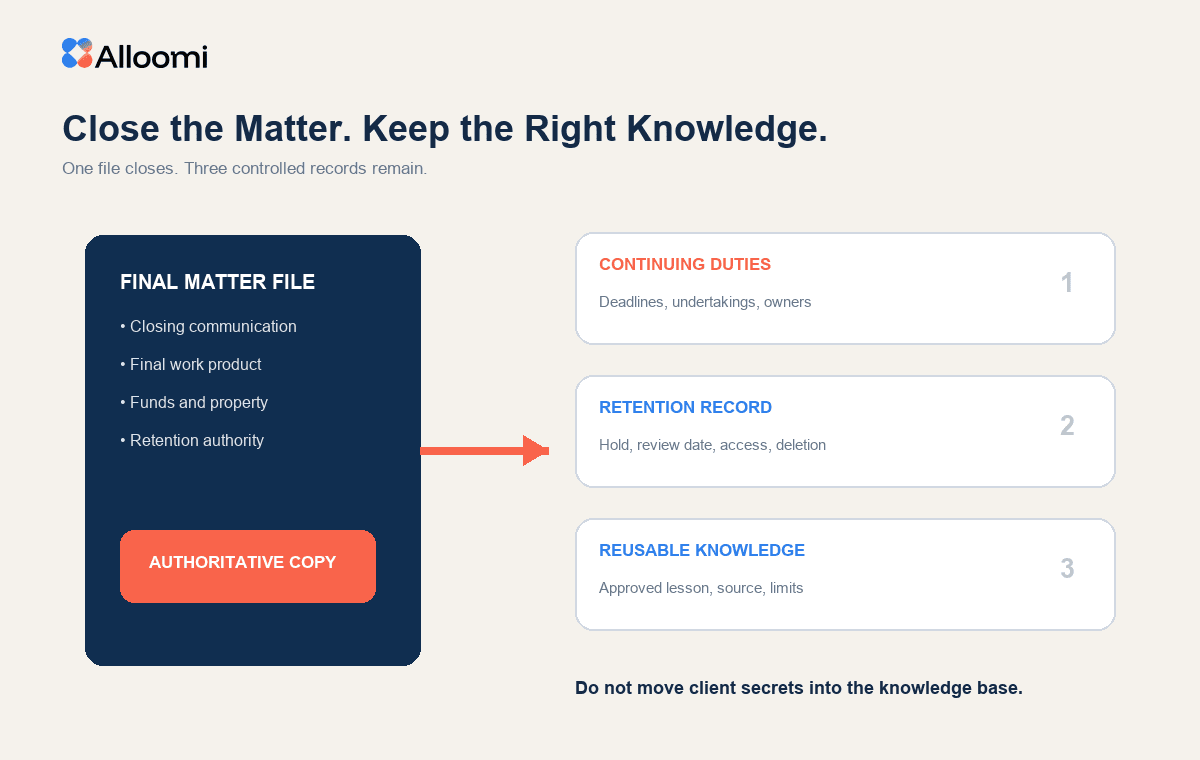
Legal completion, records administration, and knowledge capture must each reach a documented endpoint.
How Should Records Be Closed?
Closing the matter should establish the authoritative file, final versions, document ownership, retention rule, destruction or review date, legal holds, access restrictions, and approved storage location. Duplicate working copies should not quietly survive in personal drives and collaboration channels.
Retention is not synonymous with keeping everything forever. Over-retention increases privacy, security, discovery, and migration burdens. Under-retention can destroy evidence or client property. The governing law, engagement terms, client instructions, professional rules, and litigation holds should control.
What Happens to Access and Vendors?
Matter workspaces, data rooms, shared mailboxes, external collaboration links, expert portals, and vendor accounts should be reviewed. Remove access that is no longer required while preserving the people who need continuing responsibility for retention, appeal, enforcement, or audit.
Document what was exported or deleted from vendors and whether deletion confirmation is available. A closed matter with an active public link is not actually closed from a confidentiality perspective.
How Do You Capture Knowledge Without Copying Client Secrets?
Separate reusable legal knowledge from client-specific facts. A useful closeout can capture approved clauses, issue taxonomies, procedural lessons, research paths, budgeting assumptions, and process improvements without moving privileged advice or sensitive facts into a broad knowledge base.
Each knowledge item should have a source, owner, approval status, jurisdiction, use condition, and review date. See Legal Knowledge Management With AI for the related governance model.
What Should the Matter Closure Record Contain?
• Matter identity, client, responsible lawyer, and closure date.
• Outcome, scope completed, and final client communication.
• Open obligations, deadlines, responsible owners, and reminders.
• Funds, property, billing, and vendor disposition.
• Authoritative file location, retention basis, and destruction review date.
• Legal-hold status and exceptions to normal disposition.
• Access removed, access retained, and reasons.
• Reusable knowledge approved for transfer and excluded confidential content.
This record also improves future handoffs. Compare the controls in legal matter handoffs, legal matter management, and legal deadline management.
How Alloomi Can Support Matter Closure
Alloomi AI can help authorized teams organize closing documents, instructions, deadlines, retention records, and approved knowledge while linking summaries to source material for human review. It does not decide file ownership, retention law, or professional obligations.
The best closure process does not merely archive work. It proves what ended, identifies what continues, controls the record, and preserves only the knowledge the organization is permitted to reuse.
Frequently Asked Questions
1. When should a legal matter be marked closed?
Only after the responsible team confirms legal work, client communication, money and property, deadlines, records, access, and future obligations.
2. Should every closed matter be kept permanently?
No. Retention should follow applicable law, professional duties, engagement terms, client instructions, legal holds, and a defensible policy.
3. Can AI summarize closed matters for knowledge management?
It can assist authorized teams, but human review must prevent privileged, confidential, personal, or restricted material from entering an inappropriate repository.